Three woods, one purpose
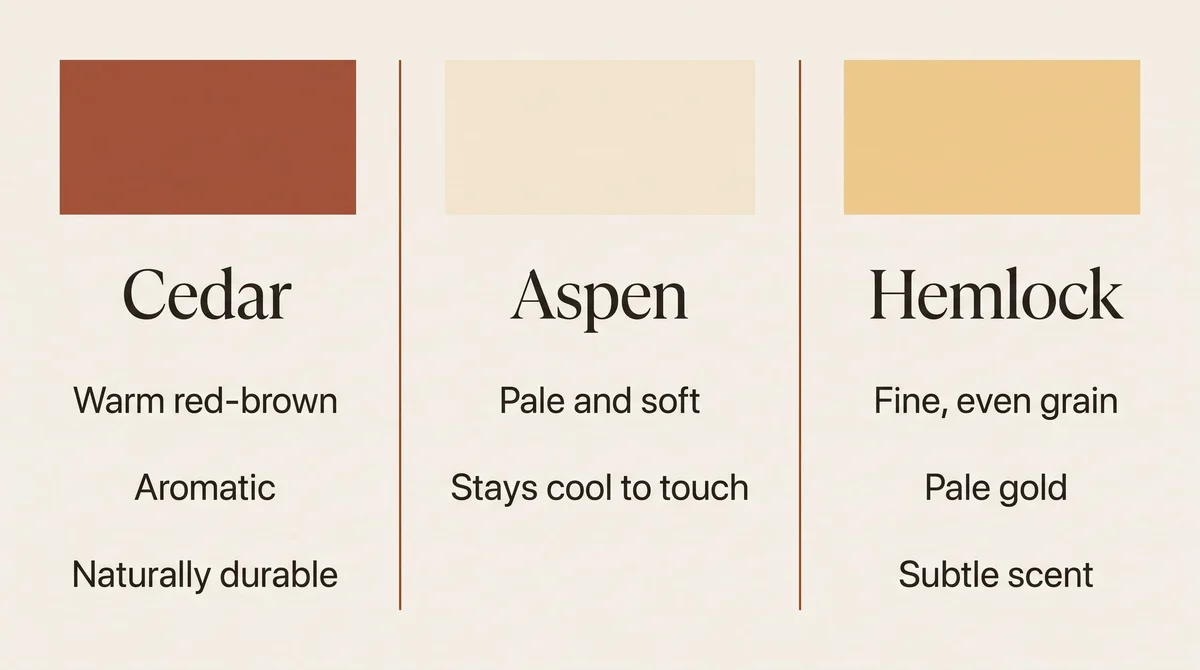
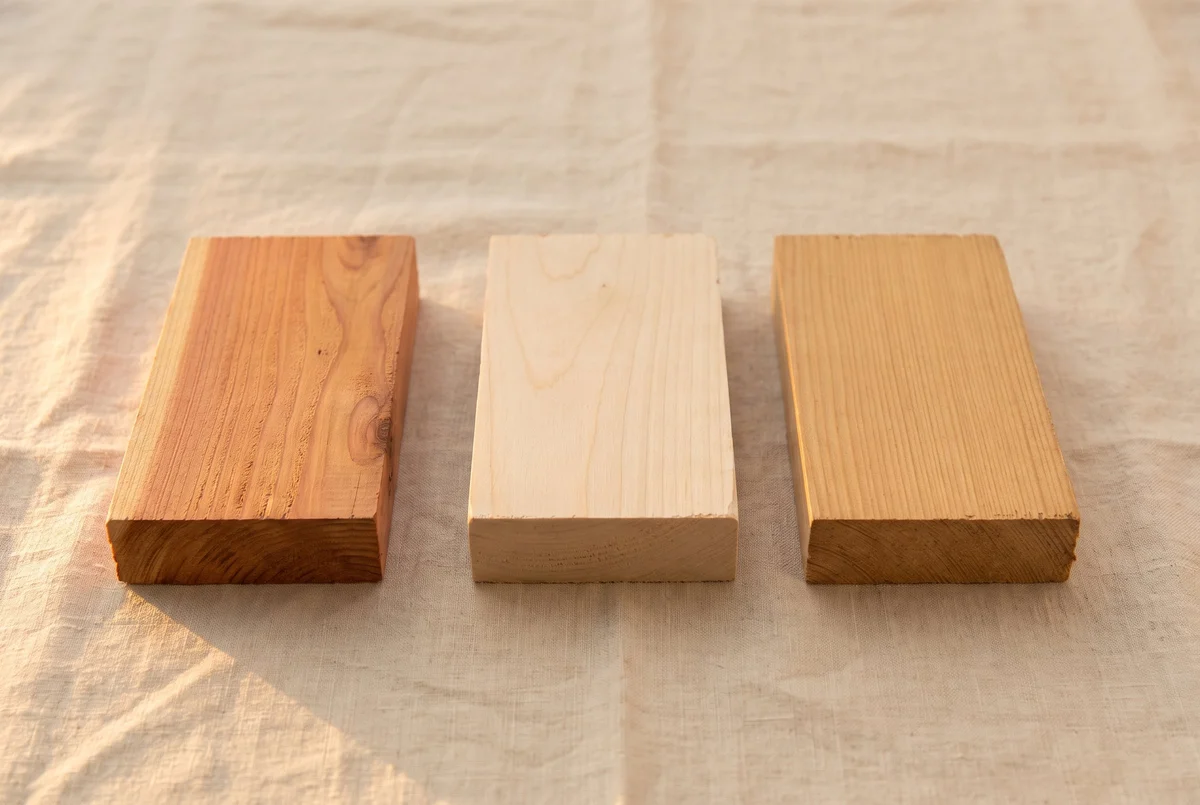
SAWO builds its sauna rooms in three timbers: cedar, aspen, and hemlock. Cedar runs deep in tone and softly aromatic. Aspen is pale, even-grained, and light-handed — a Nordic staple that keeps a room bright. Hemlock sits calmly between the two, straight-grained and understated. All three share the properties a sauna’s inner shell actually needs: low resin content, so the wood does not bleed sap onto bare skin once the room is hot; a surface that stays comfortable to the touch even near the heater; and a grain that has been kiln-dried and finished to move predictably as humidity swings.
That last property is the one a tropical installation tests hardest.
What a Finnish winter never asks of a sauna
A sauna built in Finland cycles between a cold, dry winter and a mild, humid summer — a real swing, but a slow, seasonal one. A sauna built in Thailand cycles between 90°C and roughly 80 percent ambient humidity dozens of times a week, every week of the year, with no dry season to let the timber fully reset. The wood inside the room has to tolerate constant, rapid humidity change at the surface least protected from it: bare timber, wet with condensation, minutes after standing close to boiling-water temperatures.
This is exactly why our planning guide treats humidity, ventilation, and timber as one connected problem rather than three separate specifications — a room’s ventilation design determines how much moisture the timber actually sees, and the timber choice determines how much of that moisture it can absorb and release without warping, checking, or graying prematurely. We won’t repeat that guidance here; if you haven’t read it, it is the more technical companion to this article.
Why the room and its surrounds are rarely the same wood
Walk around one of our installations and you will often find two different timbers doing two different jobs. Inside the sauna — the benches, the wall cladding, the surfaces the body actually touches — the wood is one of SAWO’s three: cedar, aspen, or hemlock, selected and kiln-dried specifically for that inner climate. Outside the room, where a cabin meets a Thai garden or a rooftop terrace directly — framing, decking, the elements that take monsoon rain, direct sun, and ground moisture without the shelter of the sauna’s own insulated shell — installations more often lean on tropical hardwoods suited to that exposure, teak among the most familiar in Thai building tradition. Neither wood is doing the other’s job, and treating one timber as fit for both roles would be a shortcut, not a design decision.
The photograph above shows exactly this pairing: a glass-walled sauna framed in teak, set into a tropical courtyard — the cabin’s Nordic interior held inside an exterior built from a wood this climate already trusts.
What this means at the planning stage
If you are specifying a sauna for a Thai site, the timber conversation has two parts, not one: what goes inside the room, and what the room sits inside. The first is largely settled by SAWO’s own catalog and your preference between cedar’s depth, aspen’s brightness, or hemlock’s quiet middle ground. The second depends on your architect, your site’s exposure, and how the sauna reads against the rest of the building — a conversation better had with drawings in front of us than guessed at in the abstract.
Bench layout follows the same logic: straight, L-shaped, or doubled benches all use the same interior timbers, sized for one to three bathers, four to six, or six and more, but the layout decision is really about how people will sit, recline, and pour water over stone — not a separate materials question. Our sauna rooms collection covers those options in full.
A note on finish, not just species
Species is only half the decision. The same cedar board, finished and installed two different ways, can behave very differently across a tropical year — how tightly boards are fitted, how much room the wall assembly leaves for the timber to expand and contract, and how the room is ventilated between sessions all matter as much as which of the three species you choose. This is another reason we treat timber as a planning question rather than a catalog choice: the wood is only as good as the room built around it.
Start with the site, not the catalog
We would rather see your site plan before recommending a timber than hand you a generic answer. Every project begins with a conversation — bring us the climate you are building in, and the wood conversation follows naturally from there.