A very old idea, newly fashionable
Pairing heat with cold is not a new invention — Nordic bathing culture has moved between sauna and a cold lake, or a roll in snow, for as long as there has been a sauna to leave. What is new is how mainstream the pairing has become elsewhere. The Global Wellness Institute named the hydrothermal renaissance a defining 2025 wellness trend, describing communal sauna culture as experiencing a global revival, and platform data cited by Fitt Insider found Nordic-inspired wellness experiences grew 62.5 percent globally between 2024 and 2025 on Eventbrite listings, with attendance up 32.8 percent — a single platform’s numbers, worth reading as directional rather than universal, but consistent with what anyone booking a recovery studio this year has likely noticed.
Thailand has its own version of this moment. A wave of recovery studios has opened across Phuket in the past few years, several of them built around exactly this pairing — a sauna or steam room beside an ice bath, aimed at an audience that used to find both only inside a five-star spa.
What the pairing is actually doing
The physiology is straightforward and well understood, even where the outcome research is thinner than the sauna-alone research we cover in our article on the Finnish longevity data. Heat dilates blood vessels near the skin, sending more blood to the surface and raising heart rate — the same response that makes a sauna session feel like gentle exertion. Cold does the reverse: vessels constrict as the body works to conserve heat, and the immediate sensation is alertness rather than relaxation. Moving deliberately between the two is, at minimum, a reliably intense sensory experience; many people report feeling clear-headed and calm afterward, and athletes have used some version of contrast bathing informally for generations. We describe it in those terms — a practice people find valuable, not a treatment with a proven mechanism — because that is what the evidence currently supports.
A simple ritual to start with
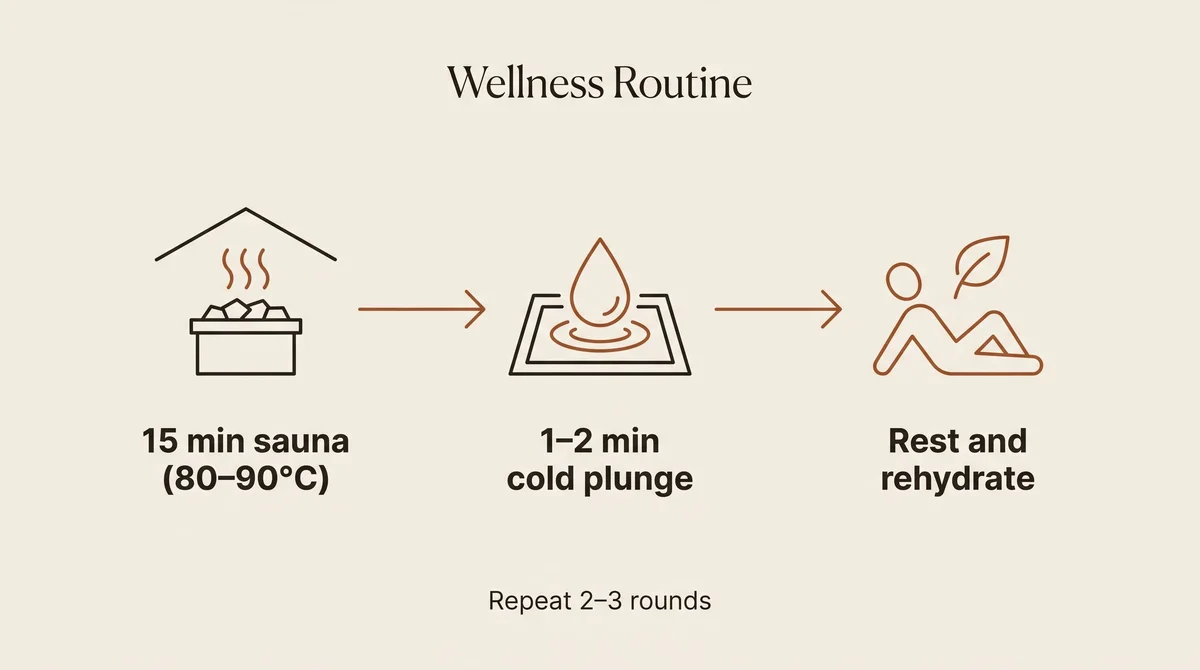
There is no single correct protocol, but a sensible starting structure, adapted from the rough pattern popularized by Andrew Huberman’s Huberman Lab and long practiced in Nordic bathing culture, looks like this:
- Sauna first, 15 to 20 minutes at a temperature that feels genuinely hot rather than merely warm.
- A short cold exposure after — a cold shower, a plunge pool, or an ice bath, however brief feels honest rather than performative.
- Repeat the cycle two or three times if the setting allows it, finishing on cold.
- Rest afterward. The point is the contrast, not the endurance.
As with any significant heat or cold exposure, anyone with a cardiovascular condition, who is pregnant, or who is otherwise medically cautious about either extreme should check with a physician before starting — ordinary prudence, not a disclaimer we are required to include.
Building it at home in Thailand
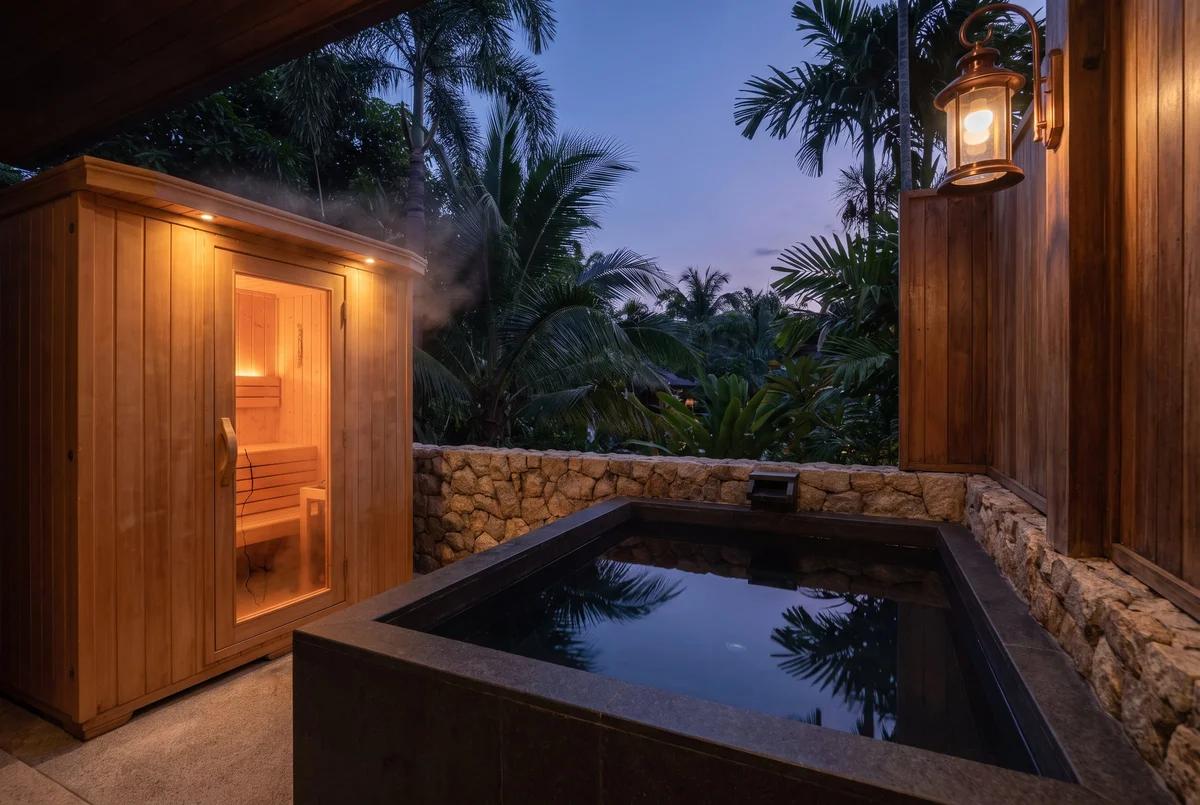
A home version of this ritual asks less of you than it looks like it should. The sauna half is the part we build: a room sized for the frequency you will actually use it, reachable from wherever the rest of your contrast ritual happens — a pool, an outdoor shower, or a plunge tub on the same terrace. The photograph above shows exactly that arrangement: a rooftop cedar sauna with an outdoor shower built into the same wall as its glass door, so the cold half of the ritual is a single step away, not a separate errand.
The cold half is simpler than most people expect — a cold plunge tub, a chilled pool, or even a determined cold shower will do the job; the ritual does not require expensive refrigeration equipment to be real. What matters more is proximity: a contrast ritual that requires walking across the house between hot and cold tends to stop happening within a month.
For hotels, resorts, and recovery studios
The same pairing is showing up at commercial scale, not just at home. Recovery studios and fitness clubs across Thailand are building sauna-and-plunge circuits as a standalone offer, and hotels are starting to add them to spa programs that once stopped at a single steam room. For that scale of use, our heaters collection includes commercial-duty models built to run for hours at a stretch, and our hospitality track covers what a spec-driven, guest-facing installation actually requires.
Whether the ritual is a private terrace or a guest-facing spa floor, it starts the same way ours always does: with a conversation about the site, the climate, and how often you actually intend to use it. Reach out when you are ready — there is no charge for the conversation, and no obligation attached to it.